Avoid Pricing Traps for Rubbish Removal in Hounslow
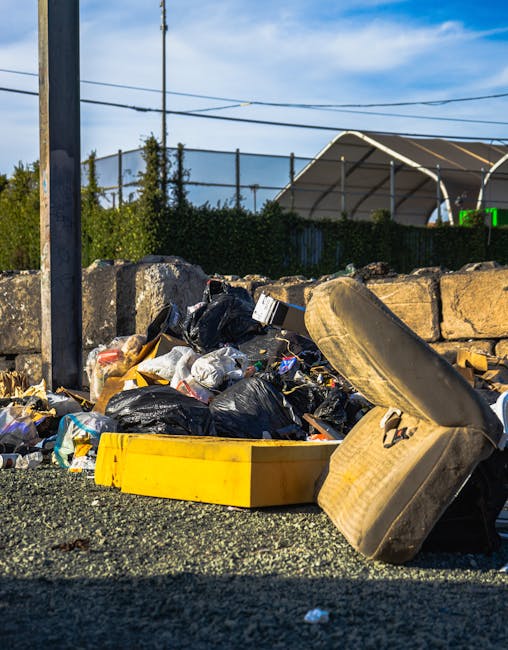
Getting rid of unwanted rubbish should feel straightforward. A clear quote, a tidy collection, job done. Yet plenty of people in Hounslow find the pricing side is where things get murky. One minute you are comparing a few numbers on a screen; the next, you are wondering why the final bill looks nothing like the first estimate. That is exactly why it pays to understand how to Avoid Pricing Traps for Rubbish Removal in Hounslow before you book.
Whether you are clearing a flat near Hounslow Central, shifting office waste, or dealing with a bulky pile after renovation work, the same rules apply: ask the right questions, spot the hidden extras, and check what is actually included. The good news? Most pricing traps are easy to avoid once you know what to look for. This guide walks you through the process in plain English, with practical advice you can use right away.
Why Avoid Pricing Traps for Rubbish Removal in Hounslow Matters
Rubbish removal pricing can be fair and transparent, but it can also be confusing if a quote is built around vague wording or assumptions. In Hounslow, where homes, shared buildings, small businesses, and commercial premises all generate different kinds of waste, the price you see at the start may not match the work on the ground. That mismatch is where frustration begins.
The biggest issue is not just cost. It is confidence. If you are clearing a property, you usually need the work done quickly and neatly. Nobody wants a truck turning up, taking one look, and suddenly saying the stairs are too narrow, the load is heavier than expected, or there is an "admin fee" nobody mentioned. Bit annoying, to be fair.
When pricing is unclear, people often feel pressured to accept surprise charges because the rubbish is already there and the job needs finishing. That is a terrible position to be in. Understanding pricing traps helps you stay in control, compare quotes properly, and avoid paying for poor communication dressed up as a bargain.
It also matters because the cheapest quote is not always the best value. A low headline price can hide extra charges for labour, vehicle access, disposal weight, certain waste types, or even waiting time. Once you know how these things work, the whole market becomes easier to read. And that makes a real difference when you are trying to choose a reliable provider in Hounslow rather than gambling on a guess.
How Avoid Pricing Traps for Rubbish Removal in Hounslow Works
At its simplest, avoiding pricing traps means breaking a quote down into its real components. A proper rubbish removal price should reflect the type of waste, the volume, the weight, the labour required, the ease of access, and any special handling needs. If one of those is ignored at the quoting stage, the final number can shift later.
In practical terms, the process usually works like this. You describe what needs removing, the provider assesses the job, and then a quote is given. The quality of that quote depends on how accurately the company gathers information. A solid provider will ask follow-up questions and may request photos, rough measurements, or details about stairs, parking, loading distance, and whether the waste includes awkward items. That is normal. It is not fussiness, it is how a fair price is built.
The traps usually happen when the initial quote is too broad. For example, a company might offer a very attractive "from" price, but that price assumes easy access, light waste, and a small load. If your job is a bit more involved, the quote can rise fast. Sometimes the increase is justified. Sometimes it is simply the result of a vague estimate that should never have been presented as dependable in the first place.
There is also a difference between a quote and an estimate, and this trips people up more often than you would think. An estimate is usually a rough guide. A quote is meant to be firmer. If a provider is using the word quote, you should expect a clearer breakdown. If that breakdown is missing, ask for it. Straightforward question, straightforward answer - that is the standard you want.
Key Benefits and Practical Advantages
Learning how to spot pricing traps gives you more than just a lower bill. It gives you better decisions across the whole job.
- More predictable costs: you know what is included before anyone turns up.
- Less stress on the day: fewer awkward conversations about extra charges.
- Better comparisons: you can compare like with like instead of apples with oranges.
- Faster booking: clear information means fewer back-and-forth emails or calls.
- Improved trust: a provider that explains pricing clearly usually explains the service clearly too.
- Fewer disputes: when scope and price are agreed, there is less room for misunderstanding later.
There is also a hidden benefit that people often overlook: better planning. If you know what drives price, you can reduce unnecessary labour or make access easier before collection day. That can genuinely save money. Move items closer to the exit, separate general waste from items needing special handling, and make sure the provider knows about access constraints in advance. Simple, but effective.
And yes, it helps you avoid the classic "I thought it would be cheaper" moment. Nobody likes that one.
Expert takeaway: the safest rubbish removal quote is not the cheapest headline figure; it is the one that explains what is included, what may change the price, and what happens if the job differs from the description.
Who This Is For and When It Makes Sense
This guide is useful for anyone in Hounslow who is arranging a waste collection and wants to avoid unexpected costs. That includes homeowners, landlords, tenants, letting agents, office managers, shop owners, contractors, and people dealing with one-off clearances after a move or refurbishment.
You will find it especially helpful if your job includes one or more of these situations:
- flat or maisonette access with stairs or limited parking
- mixed waste, such as furniture, bagged rubbish, and small appliances
- commercial waste from a business clear-out
- heavy or awkward items that need extra lifting
- time-sensitive collections where delays are costly
- jobs where the amount of waste is hard to judge at first glance
It also makes sense if you have been caught out before. Maybe a previous provider quoted one price, then reclassified the job on arrival. Maybe the team was fine but the paperwork was vague. Or maybe you simply want to do better this time and avoid the whole mess. Fair enough.
If you are comparing providers, it can help to start with a page that explains how the company handles pricing and quotes. For example, a clear pricing and quotes page should tell you whether pricing is based on load size, waste type, access, or a mixture of factors.
Step-by-Step Guidance
If you want to avoid pricing traps properly, do not just ask, "How much do you charge?" That is too broad. A better approach is to gather enough detail to make the quote meaningful.
- List exactly what needs removing. Include large items, bagged waste, dismantled furniture, appliances, and anything that might be awkward to carry.
- Explain access clearly. Mention stairs, narrow hallways, lift access, parking distance, gated entry, or restricted loading areas.
- Ask how the price is calculated. Find out whether it is based on volume, weight, labour, or a set minimum charge.
- Check what is included. Ask whether labour, disposal, loading time, congestion-related delays, and VAT are included where relevant.
- Confirm what could change the price. A good provider will explain which job details might require a revised quote.
- Request the total expected cost in writing. If the provider can only give a vague range, ask them to narrow it down and explain why the range exists.
- Read the small print. Terms and conditions often cover cancellation, access issues, and what happens if the waste differs from what was described.
- Prepare the site before collection. Easy access can reduce labour time and remove excuses for extra charges.
If you are unsure whether the provider is being straight with you, ask for examples. For instance: "If I have two sofas, six bags, and a washing machine on the second floor, what would change the price?" A trustworthy company should be able to answer clearly. If they cannot, that is a warning sign. Not always a deal-breaker, but definitely worth pausing on.
A practical tip: take photos before the collection and share them. In our experience, that alone clears up a surprising amount of confusion. It also gives you a record if the scope changes later.
Expert Tips for Better Results
Once you understand the basics, the next step is learning the little things that make a big difference. These are the details experienced customers tend to notice sooner.
1. Treat "from" prices carefully
A "from" price can be useful, but only as a starting point. It tells you the entry level, not the real cost of your job. If a quote looks very low, ask what scenario that figure applies to. Sometimes it only covers the easiest jobs, and that is where pricing traps begin.
2. Ask about weight-sensitive waste
Some waste types are light but bulky; others are small but surprisingly heavy. Old bathroom fittings, rubble, soil, and mixed renovation waste can alter pricing. If the provider does not ask about waste type, they may not be pricing accurately. That is a bit like quoting a meal without knowing whether the customer wants tea, coffee, or a full roast.
3. Pay attention to access and timing
Access can affect labour more than people expect. A first-floor flat with tight parking and a long carry is not the same as a driveway collection. Busy times, waiting, and building restrictions can also matter. Mention them early.
4. Keep the paperwork simple but clear
You do not need a legal document for everything. But you do need a written summary of what the quote covers. That could be an email, a message, or a formal quote. The point is to make the agreement visible.
5. Choose clarity over charm
Friendly customer service is great. But a charming phone call does not replace a clear pricing structure. The best providers can do both. Warm tone, straight answers. That is what you want.
For extra peace of mind, check whether the business is open about safety and handling standards. A clear health and safety policy and insurance and safety information are useful signals that the company takes the work seriously.
Common Mistakes to Avoid
Most pricing problems are caused by simple mistakes rather than major deception. That is actually good news, because simple mistakes are easy to fix next time.
- Only comparing headline price: the cheapest visible number is not always the best value.
- Giving incomplete job details: if you forget to mention access issues, the quote may be inaccurate.
- Not asking what is excluded: exclusions are where surprise costs like to hide.
- Ignoring disposal differences: not all waste is treated the same way.
- Failing to confirm the final price: if you never asked for confirmation, there is more room for dispute.
- Assuming all providers quote the same way: some use volume, some use weight, some use labour time, and some use a mix.
- Leaving sorting until collection day: last-minute sorting can slow the job and muddy the pricing conversation.
One of the most common traps is not asking how the company handles changes on arrival. Imagine the team arrives and discovers extra bags in a back room. If they were not told about them, the original quote may no longer be fair. The problem is not the change itself; it is the surprise. Surprises are expensive, almost by definition.
Another mistake is trusting a quote that sounds too polished but gives no substance. If you are told "we beat any price" yet no one explains what the service includes, be cautious. Good pricing should be understandable, not mysterious.
Tools, Resources and Recommendations
You do not need fancy tools to avoid rubbish removal pricing traps. A phone, a notebook, and a few sensible questions usually do the job. Still, a small bit of preparation goes a long way.
- Photos or short video: useful for showing the volume and access route.
- Basic room or item list: helps you avoid forgetting a bulky item behind the door.
- Measurements for large furniture: especially handy for wardrobes, desks, or large appliances.
- Access notes: include parking, lifts, floor level, and any building restrictions.
- Quote comparison notes: write down what each provider includes so you can compare fairly.
If you want to understand the business better before you book, read the company's about us page. That often gives you a feel for how the firm works, what kind of jobs it handles, and whether the tone is transparent. For customer-facing policies, it is also sensible to review terms and conditions and payment and security information before handing over any payment details.
For disposal and environmental responsibility, a clear recycling and sustainability page can tell you how waste is treated after collection. That does not tell you the price on its own, but it does help you assess value and standards more broadly.
Law, Compliance, Standards, or Best Practice
Rubbish removal is not just a pricing issue. It also sits within a wider framework of responsible waste handling, safe lifting, correct disposal, and clear customer communication. You do not need to become a compliance expert, but it helps to know what good practice looks like.
In the UK, reputable waste carriers should operate responsibly and follow the usual obligations around safe collection and lawful disposal. As a customer, your role is to avoid handing waste to a provider that looks vague, uninsured, or careless. That matters because if a collection is done badly, the problem can circle back to you in one form or another. Nobody needs that headache.
Best practice usually includes:
- clear quote terms
- honest description of what is included
- safe handling of heavy or awkward waste
- transparent payment terms
- responsible recycling or disposal routes where appropriate
For businesses in particular, it is worth checking how a provider approaches complaints and service issues. A visible complaints procedure suggests there is a proper route if something goes wrong. That is not pessimistic; it is just sensible due diligence. While you are at it, a clear privacy policy is a good sign that the company treats your data carefully when you request a quote or book a collection.
Keep in mind that compliance is not only about legal minimums. It also includes fair trading habits, clarity, and professionalism. A provider can be technically capable and still create pricing friction through poor communication. The best ones tend to avoid that completely.
Options, Methods, or Comparison Table
There are several ways rubbish removal pricing is commonly presented. Each has pros and cons, and the best choice depends on your job.
| Pricing method | How it works | Best for | Watch out for |
|---|---|---|---|
| Volume-based pricing | Cost is linked to how much space your waste takes in the vehicle | Mixed household clearances and general rubbish | Misjudging volume, especially with bulky but light items |
| Weight-sensitive pricing | Heavier loads may cost more because disposal is harder or dearer | Soil, rubble, bricks, and other dense waste | Not all waste looks heavy at first glance |
| Labour-based pricing | Charge reflects the time and effort needed to collect the items | Jobs with awkward access or many heavy items | Slow access or extra handling can increase cost |
| Fixed quote | A set price is agreed after the job is described | Clear, well-documented collections | The quote must be based on accurate information |
| "From" pricing | Lowest starting price, adjusted depending on job details | Very simple jobs where the scope is obvious | Often the easiest place for hidden extras to appear |
If you want the safest route, a fixed quote with clear assumptions is usually easiest to manage. It is not always the cheapest, but it is often the least stressful. And stress has a cost too, if we are being honest.
Case Study or Real-World Example
Picture a small flat clearance in Hounslow. The customer has a sofa, two wardrobes, a mattress, and several bags of mixed household waste. On paper, it looks simple enough. But there is a catch: the flat is on the third floor, there is no lift, and parking nearby is tight on weekday mornings.
One provider gives a quick, low quote over the phone without asking many questions. Another asks for photos, checks access, and explains that the price depends on the carry distance and loading time. At first glance, the first quote looks better. But once collection day arrives, the low quote starts to wobble. Suddenly there is an extra charge because the team has to carry everything farther than expected.
The second provider's quote may have been slightly higher, but it was also clearer. The customer knew what to expect. No drama. No awkward chat at the doorway. Just a smooth collection and a final bill that matched the agreement.
That is the real lesson here. A transparent quote is often worth more than a bargain that only exists until the van turns up. In a busy household, or on a day when you are already juggling keys, work calls, and a missing parking space, that clarity feels priceless. Almost boring, in a good way.
Practical Checklist
Use this checklist before you confirm any rubbish removal booking in Hounslow.
- Have I listed everything that needs removing?
- Have I mentioned stairs, lifts, parking, and access restrictions?
- Do I understand whether the price is based on volume, weight, labour, or a fixed quote?
- Have I asked what is included in the price?
- Do I know what could cause the price to change?
- Have I asked whether VAT, waiting time, or extra labour might apply?
- Have I seen the quote in writing?
- Have I checked the terms and conditions?
- Do I know how payment works?
- Have I reviewed the provider's safety and recycling information?
One small extra step can save a lot of hassle: write down the date, time, and name of the person who gave the quote. It sounds minor, but when details blur together later, that note can be very useful.
Get a free quote today and see how much you can save.
Conclusion
To avoid pricing traps for rubbish removal in Hounslow, focus on clarity, not just cost. Ask what the quote covers, how the price is calculated, and what might change it. Share photos, explain access issues, and make sure the final agreement is written down in a way you can easily refer to later.
The smartest customers do not just hunt for the lowest number. They look for the cleanest explanation. That is usually where the real value sits. And once you have a simple system for comparing quotes, the whole process gets easier, calmer, and far less likely to produce an unpleasant surprise. Truth be told, that peace of mind is often what people are paying for.
If you are preparing a clearance and want a reliable next step, take a moment to review the provider's key policy pages, compare the quote properly, and then move forward with confidence. A good rubbish removal job should leave you with less clutter, not more doubt.
Frequently Asked Questions
How do I avoid hidden charges for rubbish removal in Hounslow?
Ask for a written quote, confirm what is included, explain access conditions, and check what could trigger an extra fee. Photos help a lot, especially for larger or mixed loads.
Why do rubbish removal quotes change after the team arrives?
Quotes often change because the job was described too loosely, the access was harder than expected, or the waste volume and weight were underestimated. Good communication before collection reduces this risk.
Is a cheap rubbish removal quote always a bad sign?
Not always, but a very low price can be a warning if it comes with little detail. If the provider cannot explain the figure clearly, you may end up paying more later.
What should a proper rubbish removal quote include?
A proper quote should explain the waste type, expected load size, labour involved, access assumptions, and any conditions that might affect the final price. The clearer the better.
Do stairs or difficult access really affect the price?
Yes, because access changes the amount of labour and time required. A third-floor flat with no lift is not the same as a ground-floor collection with easy parking.
Should I send photos before getting a quote?
Absolutely, if you can. Photos make it easier for the provider to judge the volume, access, and overall job scope. That usually leads to a more reliable price.
What is the difference between an estimate and a quote?
An estimate is a rough guide, while a quote is meant to be firmer and clearer. If a provider says it is a quote, you should expect more certainty about the price and scope.
How can I compare two rubbish removal companies fairly?
Compare what each one includes, not just the headline number. Check labour, disposal, access assumptions, payment terms, and whether the price is fixed or adjustable.
Is it worth checking a company's terms and conditions?
Yes, because the small print often explains cancellations, access issues, payment rules, and any circumstances where charges may change. It is dull reading, but useful stuff.
What if the rubbish includes awkward or heavy items?
Tell the provider in advance. Heavy items, rubble, soil, and mixed construction waste can affect pricing and handling. Clear description now is much better than a surprise later.
Should I choose the provider with the lowest price?
Not by itself. A fair price with clear terms is usually better than the lowest price with vague conditions. Value and clarity matter just as much as cost.
How do I know if a rubbish removal company is being transparent?
They answer questions directly, explain their pricing method, provide written confirmation, and are open about safety, payment, and recycling. That is the behaviour to look for.
Can I reduce rubbish removal costs before the team arrives?
Yes. Sort items where possible, make access easier, move waste closer to the exit, and share accurate information in advance. Little changes can trim the effort and help keep the price steadier.
And if you are still weighing up your options, that is perfectly normal. A careful choice now tends to save time, money, and a fair bit of hassle later.