Household Hazard Waste in Hounslow: Safe Disposal Options
If you have a box of half-used paint, a tired old battery, a leaking cleaning product, or a shed full of chemicals you have been avoiding for months, you are not alone. Household hazardous waste has a habit of quietly gathering in corners until one day it becomes a real problem. This guide to Household Hazard Waste in Hounslow: Safe Disposal Options explains what belongs in that category, why safe handling matters, and how to dispose of it sensibly without creating risk for your home, your neighbours, or the environment.
Let's face it, most people do not need a lecture. They need clear answers: what can go where, what should never go in the bin, and what the safest next step is when you are staring at a confusing pile of awkward items. That is exactly what this article covers, with practical guidance for everyday households in Hounslow.
For broader household clearing needs alongside hazardous items, it can also help to understand services like home clearance, house clearance, and general waste removal, especially if you are tackling a full declutter rather than one object at a time.
Table of Contents
- Why Household Hazard Waste in Hounslow: Safe Disposal Options Matters
- How Household Hazard Waste in Hounslow: Safe Disposal Options Works
- Key Benefits and Practical Advantages
- Who This Is For and When It Makes Sense
- Step-by-Step Guidance
- Expert Tips for Better Results
- Common Mistakes to Avoid
- Tools, Resources and Recommendations
- Law, Compliance, Standards, or Best Practice
- Options, Methods, or Comparison Table
- Case Study or Real-World Example
- Practical Checklist
- Conclusion
- Frequently Asked Questions
Why Household Hazard Waste in Hounslow: Safe Disposal Options Matters
Household hazardous waste is not just "messy rubbish". It is waste that can cause harm if it is handled badly, mixed with ordinary rubbish, or stored in a damp cupboard for too long. In a typical home, that can include items such as solvent-based paint, aerosols, pesticides, bleach, drain cleaners, fluorescent tubes, batteries, certain electrical items, and leftover DIY chemicals. Some of these items can leak. Some can react with other substances. Some can create fumes that make a small room smell sharp and unpleasant, almost metallic.
Why does this matter in Hounslow specifically? Because busy homes generate awkward waste all the time: decorating waste after a weekend project, garage clutter from years of "I'll deal with it later", or old products found during a loft tidy-up. If hazardous items are bundled together with regular rubbish, they can put collection crews, householders, and recycling systems at risk. A single cracked container can turn a tidy bag into a contaminated one.
There is also a practical side. Safe disposal helps avoid accidental spills in your hallway, back garden, or car boot. It reduces the risk of fires, skin irritation, and environmental damage. And if you are clearing a property after a move, bereavement, or long period of buildup, getting rid of hazardous items properly can make the whole job feel manageable again. Small win, but a real one.
Expert summary: If an item can burn, corrode, poison, leak, or react, treat it carefully until you know the safest disposal route. When in doubt, keep it separate, sealed, and clearly labelled.
How Household Hazard Waste in Hounslow: Safe Disposal Options Works
The safe disposal process is usually straightforward once you slow down and sort things properly. The main idea is simple: identify the item, check whether it is hazardous, isolate it from everyday waste, and then choose a suitable disposal method. The method depends on the item type, condition, and quantity.
1. Identify the waste type
Start by reading labels carefully. If a product says flammable, corrosive, toxic, irritant, or harmful, assume it needs extra care. Even if the label is faded, the smell, texture, or original packaging can give clues. An old tin of paint with a hardened lid is still not something to casually tip into the general bin.
2. Keep it separate
Do not mix chemicals together. Keep liquids upright where possible, and place lids on tightly. If a container is damaged, set it inside a second container or tray to contain drips. This is the sort of dull precaution that saves a lot of trouble later. Trust me, the one time you skip it is usually the time it matters.
3. Match the item to the right route
Some items are suitable for specialist collection, some need recycling-style separation, and some are best handled through a broader waste service if they are part of a larger household clear-out. For example, a garage full of mixed clutter may be better dealt with as part of a garage clearance, while old furniture and unwanted bulky items may sit alongside non-hazardous materials in a furniture disposal or furniture clearance plan.
4. Arrange collection or drop-off
Depending on the item, you may need to use a dedicated service, a local recycling route, or a specialist clearance team that can separate hazardous items from the rest. Timing matters too. If you have a leaking tin or damaged container, do not let it sit for weeks. Deal with it promptly, ideally the same day.
5. Confirm safe handover
Before handing over the waste, make sure it is sealed, labelled where possible, and presented in a way that prevents spills. If you are using a professional clearance service, ask how the waste will be handled and separated. Good operators should be able to explain this in plain English without making it sound like a riddle.
Key Benefits and Practical Advantages
Safe disposal of hazardous household waste is not just about compliance. It makes day-to-day life easier in ways people often overlook.
- Lower risk of accidents: You reduce the chance of leaks, burns, bad odours, and cross-contamination.
- Cleaner storage spaces: A tidy cupboard, loft, or garage feels lighter and more usable.
- Better recycling outcomes: Separating harmful items helps the rest of your waste stay clean enough to be processed correctly.
- Less stress during clear-outs: A well-planned approach means fewer last-minute decisions and fewer "where on earth does this go?" moments.
- Peace of mind: You know the waste has been dealt with safely rather than shoved into the nearest bin and hoped away.
There is also a subtle benefit that people only notice afterwards: once the awkward waste is gone, the whole home project usually moves faster. The cupboard gets sorted. The loft gets emptied. The garage stops being a mini chemistry set. And yes, that counts as progress.
If your household clear-out has grown beyond a few items, a structured service such as flat clearance or loft clearance can make the larger job easier to manage, especially when hazardous objects are only part of the picture.
Who This Is For and When It Makes Sense
This topic matters for a lot of ordinary households, not just people with a long list of chemicals under the sink. In our experience, the people who benefit most are often the ones who are simply trying to get a room back under control.
- Homeowners clearing out sheds, garages, or lofts
- Renters preparing to move out and wanting to leave the property tidy
- Families after a renovation or decorating project
- People handling the belongings of a relative after a bereavement
- Anyone with old cleaning products, paint, batteries, or aerosols sitting unused for years
- Landlords and managing agents dealing with mixed waste left behind in a property
It also makes sense if you have a lot of non-hazardous bulky waste at the same time. For example, a tired sofa, old shelving, and a handful of hazardous household items can be sorted as part of a wider house clearance or home clearance approach. That is often more efficient than trying to tackle each item separately.
Ask yourself one simple question: is this something I can safely and legally place with ordinary waste? If the answer is uncertain, pause. That pause is useful. It is the difference between a tidy solution and a messy one.
Step-by-Step Guidance
Here is a practical process you can follow without overthinking it.
- Gather the suspect items in one place. Work in daylight if you can. A kitchen table or garage floor is often better than a cramped cupboard where labels are hard to read.
- Sort by category. Keep paints, solvents, batteries, aerosols, and electrical items separate. Do not put liquid cleaners next to powders if you can avoid it.
- Check for leaks or damage. If a container is compromised, place it in a second container or a sturdy tray. Use gloves if needed.
- Remove anything that does not belong. Sometimes a general item gets mixed in, like a screwdriver, old cloths, or garden waste. Pull those out now.
- Decide on the disposal route. Small quantities may fit a standard recycling or disposal route, while larger or mixed loads may need specialist help.
- Keep transport safe. If you are taking items somewhere, secure them so they cannot tip. A leaking bottle rolling around in the boot is not a good afternoon.
- Hand over with context. Tell the collection team what you have, especially if there are liquids, chemicals, or broken items involved.
A useful rule: if you cannot confidently explain what the item is, it probably needs careful handling. That does not mean panic. It just means slow down and separate it.
Expert Tips for Better Results
A few small habits make a big difference.
Keep original packaging where possible
Original containers usually include the clearest safety information. If you decant a product into something else, you risk losing labels and confusing the whole process. If the original bottle is still intact, keep it that way.
Store hazardous items away from heat
A shed can be freezing in winter and hot in summer, and both extremes matter. Flammables should never be left close to heaters, direct sunlight, or ignition sources. Even a garage that "seems fine" can become less fine in warmer weather. You know how that goes.
Separate batteries from metal objects
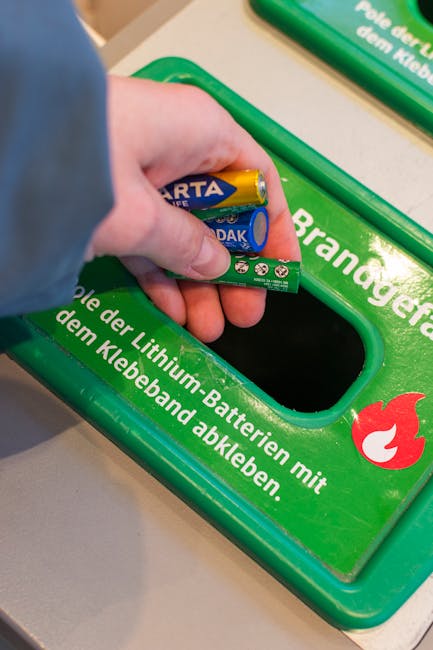
Loose batteries can short if they touch keys, coins, or other batteries. Tape terminals if advised by the product guidance, and keep them in a non-conductive container if you are waiting for disposal.
Use a staged clean-out
Do not try to clear the loft, the garage, and the under-sink cupboard in one heroic burst unless you really enjoy chaos. Work room by room. You will notice the process feels less stressful when the decisions are smaller.
Ask about sorting and recycling
If you use a clearance provider, it is fair to ask how items are separated and where they go next. A good service should be open about responsible handling and recycling practices. If sustainability matters to you, take a look at a provider's approach to recycling and sustainability.
Common Mistakes to Avoid
Most problems with household hazardous waste come from rushing. Here are the mistakes that tend to cause the most trouble.
- Putting hazardous items in general rubbish: This is the big one. It creates risks for everyone who handles the waste afterwards.
- Mixing different chemicals: Never assume two products will "cancel each other out". They probably will not.
- Ignoring half-empty containers: An almost empty tin of paint can still be hazardous.
- Leaving items in the rain: Water can damage labels, create leaks, and make containers harder to handle safely.
- Transporting loose items unsafely: A cracked bottle on the back seat is asking for a bad time.
- Forgetting about hidden hazardous waste: Batteries in old toys, bulbs in boxes, and chemical cleaners in cupboards often get missed.
One very human mistake is assuming that if a product was once common in the home, it must be harmless. Not really. Age does not make it safer. Sometimes it makes it worse, especially when seals fail or labels vanish.
Tools, Resources and Recommendations
You do not need fancy equipment, but a few simple tools help.
- Disposable gloves: Useful when handling questionable containers or residue.
- Sturdy boxes or plastic trays: Good for separating items and catching drips.
- Marker pen and labels: Handy if a container needs temporary identification.
- Bin liners for non-hazardous sorting: Keep general waste separate from the tricky stuff.
- Flashlight: Very useful in lofts, garages, and under-sink cupboards where labels can be hard to read.
For larger household projects, it can help to combine hazardous waste planning with a more general property tidy-up. Services such as garage clearance, loft clearance, and house clearance are often the practical answer when there is simply too much mixed material to handle one item at a time.
If you are comparing providers, useful things to ask include:
- Do you separate hazardous items from general waste?
- How do you handle liquids, paint, and damaged containers?
- Can you deal with mixed household waste in one visit?
- What happens to recyclable items?
- Do you provide a clear price structure before collection?
Law, Compliance, Standards, or Best Practice
For UK households, the safest approach is to treat hazardous waste as something that should never be guessed at. While the exact disposal route depends on the item and local arrangements, the general best practice is consistent: do not dispose of hazardous substances with ordinary rubbish unless you are certain that route is permitted and safe.
Householders should also be careful about duty of care in a practical sense. That means making sure waste is stored, passed on, and collected responsibly. If you use a third-party waste carrier, choose one that can explain their process clearly. You do not need a lecture. You do need confidence that the waste will not end up handled badly somewhere down the line.
For larger property clearances, it is sensible to use a company that can manage mixed waste safely and transparently. Their internal policies around health and safety, insurance and safety, and terms and conditions should be easy to find and understand. That is not just paperwork. It is part of trust.
Where a household project includes personal information or sensitive belongings, it can also be useful to understand a provider's privacy policy and service approach. Not exciting, admittedly, but worth checking.
Options, Methods, or Comparison Table
There is no single correct route for every item. The right choice depends on how much waste you have, how hazardous it is, and whether you are also clearing bulky household items at the same time.
| Option | Best for | Pros | Watch-outs |
|---|---|---|---|
| Keep separate for specialist handling | Small amounts of paint, batteries, aerosols, or cleaners | Simple, controlled, low risk when done correctly | Needs careful storage and patience |
| Part of a wider home or house clearance | Mixed household clutter plus a few hazardous items | Efficient, less lifting, good for larger jobs | Hazardous items still need proper separation |
| Garage or loft clean-out with sorting | Long-stored waste in forgotten spaces | Good for uncovering hidden risk items | Can be time-consuming if heavily cluttered |
| General waste removal service | Non-hazardous household waste alongside the problem items | Convenient for bulk disposal | Not all hazardous items are suitable, so check first |
If you have a lot of mixed clutter, combining the process with a waste removal service may be the most practical route. For people in flats or smaller properties, flat clearance can also be a tidy solution because access, stairs, and storage space often make DIY sorting awkward.
Case Study or Real-World Example
Here is a realistic scenario. A family in Hounslow decides to clear the garage after years of storing leftover decorating supplies, garden chemicals, broken plant pots, and a few old toys. Under one shelf they find several half-used paint tins, two cracked spray cans, a battery charger with loose batteries, and a bottle of drain cleaner that has leaked slightly into a cardboard box.
The first instinct might be to bundle everything into black bags and get it over with. That would be the fast route. Not the safe one.
Instead, they separate the items into categories. The paint tins are kept upright and isolated. The damaged spray cans are set aside with care. The drain cleaner is placed in a tray to catch drips. Non-hazardous items like the broken toys and empty boxes are sorted separately. After that, the family books help for the mixed household waste and bulky garage clutter, while keeping the hazardous items clearly identified.
The result is not dramatic. No heroic music. Just a safer, calmer garage, and one less thing hanging over them. That is often what good disposal looks like in real life: steady, boring, effective. Which, to be fair, is exactly what you want from anything involving chemicals.
Practical Checklist
Use this checklist before you dispose of household hazardous waste.
- Have I identified every item that may be hazardous?
- Have I kept liquids, batteries, and chemicals separate?
- Are containers sealed and upright where possible?
- Have I checked for leaks, cracks, or damaged labels?
- Have I removed non-hazardous items from the same pile?
- Do I know which items need specialist handling?
- Is the waste stored away from heat and children?
- Have I avoided mixing products together?
- Have I confirmed the safest disposal route before moving anything?
- If I am using a clearance service, have I explained exactly what is included?
If the answer to any of those is "not yet", that is okay. Stop there and sort it properly. One careful hour now is usually better than a messy ten minutes later.
Conclusion
Household hazardous waste does not need to be stressful, but it does need respect. The safest approach is usually the simplest one: identify it, separate it, store it carefully, and choose the right disposal route for the type and amount of waste you have. In Hounslow, that might mean handling a few items yourself, or it may mean bringing in a broader clearance service when the job includes loft clutter, garage waste, furniture, or mixed household items.
What matters most is avoiding shortcuts. A little care now protects your home, your family, and everyone who handles the waste after you. And once it is sorted, the relief is real. The cupboard opens cleanly. The garage smells less chemical and more like a space again. Life moves on.
Get a free quote today and see how much you can save.
Frequently Asked Questions
What counts as household hazardous waste?
It usually includes items such as paints, solvents, aerosols, batteries, pesticides, certain cleaners, fluorescent tubes, and some electrical items. If a product can burn, corrode, poison, or leak, treat it carefully.
Can I put old paint in the normal bin?
Usually no, not unless you are absolutely sure it is safe and permitted to do so. Old paint often needs separate handling because it can leak, smell, or contaminate other waste.
What should I do if a container is leaking?
Place it upright, isolate it from other items, and contain the leak in a second tray or container if possible. Do not mix it with anything else. If the leak is serious, deal with it promptly.
Are batteries considered hazardous waste?
Many batteries should be treated with care because they can short-circuit, leak, or cause harm if disposed of incorrectly. Keep them separate from metal items and other waste.
Can hazardous household waste be collected with furniture or other bulky items?
Sometimes yes, but only if the hazardous items are separated and the service accepts them. A mixed household clearance can be practical, especially if you are also clearing furniture or clutter.
Do I need a specialist for a few old cleaning products?
Not always. Small quantities may be manageable if they are intact and clearly labelled. If you have several products, damaged containers, or mixed waste, specialist help is often safer.
How should I store hazardous waste before disposal?
Keep it in a cool, dry place away from heat sources, children, and pets. Leave it in original containers where possible and make sure lids are secure.
What if I do not know what an old product is?
Do not guess. Keep it isolated, avoid opening it, and seek a disposal route that can handle unknown or mixed household waste safely.
Is it worth using a clearance service for hazardous household waste?
If the waste is part of a larger clear-out, yes, it often saves time and reduces risk. It is especially useful when hazardous items are mixed with furniture, loft clutter, or garage contents.
How do I know if a waste carrier is trustworthy?
Look for clear communication, sensible handling processes, and transparent service information. Trustworthy providers should explain how they manage safety, recycling, and the separation of hazardous items.
Can I combine garden waste and hazardous household waste in one job?
Yes, but keep them separate. Garden waste can often be handled through a dedicated service such as garden clearance, while hazardous items still need careful sorting and handling.
What is the safest first step if I find a lot of hazardous waste at once?
Stop and sort it before moving anything else. Separate the items, check for leaks, keep them away from heat, and decide whether the job is better handled as part of a larger clearance. That first pause makes everything safer.